Creating Inclusive Programs for Diverse Community Participation
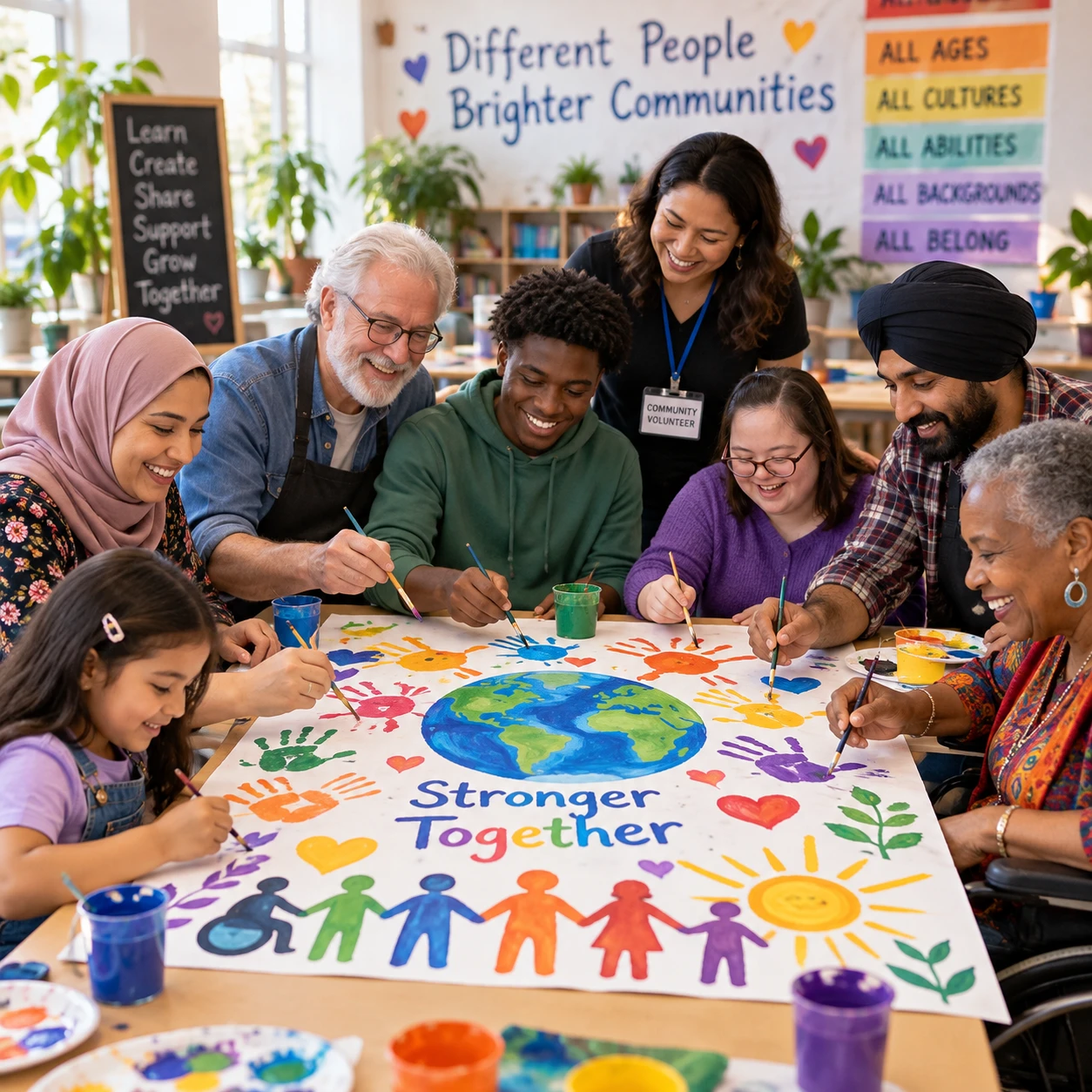
An effective community program makes it possible for people with different backgrounds, abilities, languages, schedules, and levels of trust to take part meaningfully. Inclusion takes more than an open invitation: organizers need to understand barriers, share decisions with community members, and keep improving how the program works.
Whether you run an NGO workshop, a neighborhood initiative, or a civic participation project, a practical approach can help more people join and stay involved. Start by asking who is missing, what may be getting in their way, and how participants can shape the response.
What inclusive community participation means
Inclusive community participation means people can access a program, contribute in ways that work for them, and influence decisions that affect their experience. It links diverse participation to meaningful involvement, rather than counting attendance alone.
A program may attract a varied group at its first event but still exclude people from ongoing planning or leadership. Inclusion considers the full experience: finding out about the program, registering, getting to the venue, taking part in activities, sharing opinions, and seeing what happens next. Participants should not have to hide a disability, abandon a cultural practice, or use a language they do not understand to be treated as valued contributors.
This does not mean every person needs the same format or support. Inclusive program design makes room for different ways to participate while keeping the program’s purpose clear. For example, a public meeting might offer spoken discussion, written comments, and a follow-up phone option. Those routes can broaden access, though organizers still need to ensure each contribution receives consideration.
Identify barriers before designing the program
Identify barriers by examining how access, language, schedule, cost, safety, and trust affect each step of participation. Ask community members what would make joining difficult before you finalize the venue, format, or recruitment plan.
Barriers are often practical and cumulative. A session held during work hours may be manageable for one person, while another may also face a bus fare, a childcare need, and a registration form in an unfamiliar language. Each obstacle can narrow the pool of participants, especially when people encounter several at once.
Use a simple journey check: How will someone hear about the program, decide whether it feels relevant, sign up, arrive, take part, and follow up? At each point, check for obstacles such as:
- Access: stairs, inaccessible toilets, poor lighting, limited seating, or a website that does not work well with assistive technology.
- Language: translated materials may be missing, or interpretation may not be arranged for discussion.
- Schedule and cost: transport, childcare, food, lost work time, or fees may make attendance unrealistic.
- Safety and trust: people may have concerns about confidentiality, discrimination, immigration enforcement, or past negative experiences with institutions.
Do not guess based on a broad identity category. Ask through confidential conversations, short surveys, or trusted local partners, and explain how responses will be used. A barrier review is a starting point, not proof that every need has been identified.
Involve community members in planning
Involve community members early by asking them to help define priorities, shape activities, and set measures of success. Participatory planning makes the program more relevant and gives participants a real role in decisions, rather than asking them to approve a finished plan.
Begin with listening sessions or small group conversations in places people already use. Ask what matters to them, what has worked before, and what would make the program worth their time. If some people are unlikely to attend a formal meeting, offer one-to-one conversations, phone calls, or a simple written response option.
Then clarify which decisions are open to change. Participants can help choose session topics, meeting times, outreach language, or ground rules. If funding or legal requirements limit a choice, state that plainly and explain why. Shared decision-making loses credibility when organizers invite opinions but never show how they affected the plan.
Pay attention to who holds influence in the room. A small group of confident regulars may not speak for people who are new, younger, disabled, or less comfortable with public discussion. Use clear facilitation, small-group activities, and different ways to contribute. Where community members take on sustained planning work, consider compensation or other practical recognition if the budget allows.
Make outreach and communication welcoming
Welcoming outreach uses clear, accessible messages and trusted community channels to explain who a program is for, what participation involves, and how to request support. Good communication reduces uncertainty before a person decides whether to join.
Write invitations in plain language. Include the purpose, dates, location, cost, transport or parking details, language options, access arrangements, and a contact method for questions. Avoid implying that participants need specialist knowledge or must share personal experiences. If registration is required, keep the form short and offer an alternative for people who cannot use it online.
Translate key information when the community uses multiple languages, and arrange interpretation for the activity itself when needed. Translation and interpretation are different services: translated text supports reading, while interpretation helps people communicate in real time. Ask participants which languages and formats are useful rather than relying on assumptions.
Reach beyond the organization’s existing mailing list. Community centers, cultural associations, schools, libraries, disability organizations, faith groups, and local service providers may help share an invitation through established relationships. Give partners accurate information and enough time to circulate it. Cultural responsiveness also means reviewing examples, images, and meeting norms so they do not frame one group’s experience as universal.
Design activities for different needs and circumstances
Design activities with flexible formats, accessible venues, and realistic schedules so participants have more than one workable way to take part. Ask about needs in advance, then make reasonable adjustments without requiring people to disclose more than necessary.
Check the venue for step-free access, accessible toilets, clear signage, suitable acoustics, and space for mobility devices. Share access details before the event, including any limitations. For online sessions, use a platform that supports captions and keyboard navigation where possible, and provide joining instructions that do not assume everyone is confident with the technology.
Offer more than one route for participation. A workshop might combine short presentations with paired discussion, quiet reflection, and written or digital comments. Provide breaks during longer sessions and make it clear whether participants can arrive late or leave early. These options can help people with varied energy levels, caregiving duties, communication styles, or work schedules, though they require facilitation so quieter contributions are not overlooked.
Plan logistics as part of the activity, not as an afterthought. Depending on local needs and available funding, that may include childcare, transport assistance, interpretation, a remote option, or refreshments. Be specific about what is available and what is not; vague assurances create frustration. A small organization can start with one change identified through direct feedback, such as moving a meeting to an evening or simplifying a registration form.
Evaluate inclusion and improve over time
Evaluate inclusion by reviewing who participates, how people experience the program, and whether their feedback leads to visible changes. Feedback and evaluation should be ongoing, because participation patterns can shift as a program grows or community circumstances change.
Track practical measures such as registration, attendance, repeat participation, and withdrawals, while protecting personal information. Where appropriate and voluntary, invite participants to share demographic information, but explain why it is collected and who can see it. Small groups can be identifiable even in an anonymous report, so avoid publishing details that could expose individuals.
Pair participation data with questions that reveal the experience behind the numbers: Was it easy to find information? Did you feel respected? Could you contribute in a way that worked for you? What should change next time? Offer different response methods, such as a short survey, private conversation, or feedback card. No single measure can prove that a program is inclusive; strong attendance, for instance, does not tell you whether participants had influence.
Close the loop. Summarize what you heard, name the changes you will make, and explain which suggestions you cannot act on yet. Revisit those decisions at the next planning point. Treat inclusion as a cycle: listen, adjust, communicate, and check again. That keeps accessibility and community engagement connected to everyday program choices rather than a one-time checklist.
Frequently asked questions
How can a small organization make a program more inclusive?
Start with a short conversation with current and prospective participants about the biggest barrier. Choose one achievable change, such as clearer event details, a more accessible venue, or a different meeting time, and check whether it helped. Small organizations can also partner with trusted groups to share outreach or coordinate language support.
How can organizations reach people who are often underrepresented?
Build relationships with organizations and community connectors that already have trust, and ask how they prefer to share information. Offer a direct invitation and multiple ways to respond. Avoid treating one person as a spokesperson for an entire community, and make sure outreach leads to a genuine opportunity to participate.
What should a program do when participants have different access needs?
Ask participants privately what would help, explain what the program can provide, and make practical adjustments where possible. Some needs may conflict, so discuss options without placing the burden on participants to resolve the issue alone. Protect confidentiality and give people a clear contact for access questions.
How can organizers tell whether a program is inclusive?
Look at who hears about it, who joins and returns, whether participants feel respected, and whether they can influence decisions. Combine participation records with confidential feedback, then document what changed as a result. Inclusion is better judged through repeated evidence and action than by a single attendance figure.