Case Study: How Community-Led Projects Can Revitalize a Neighborhood

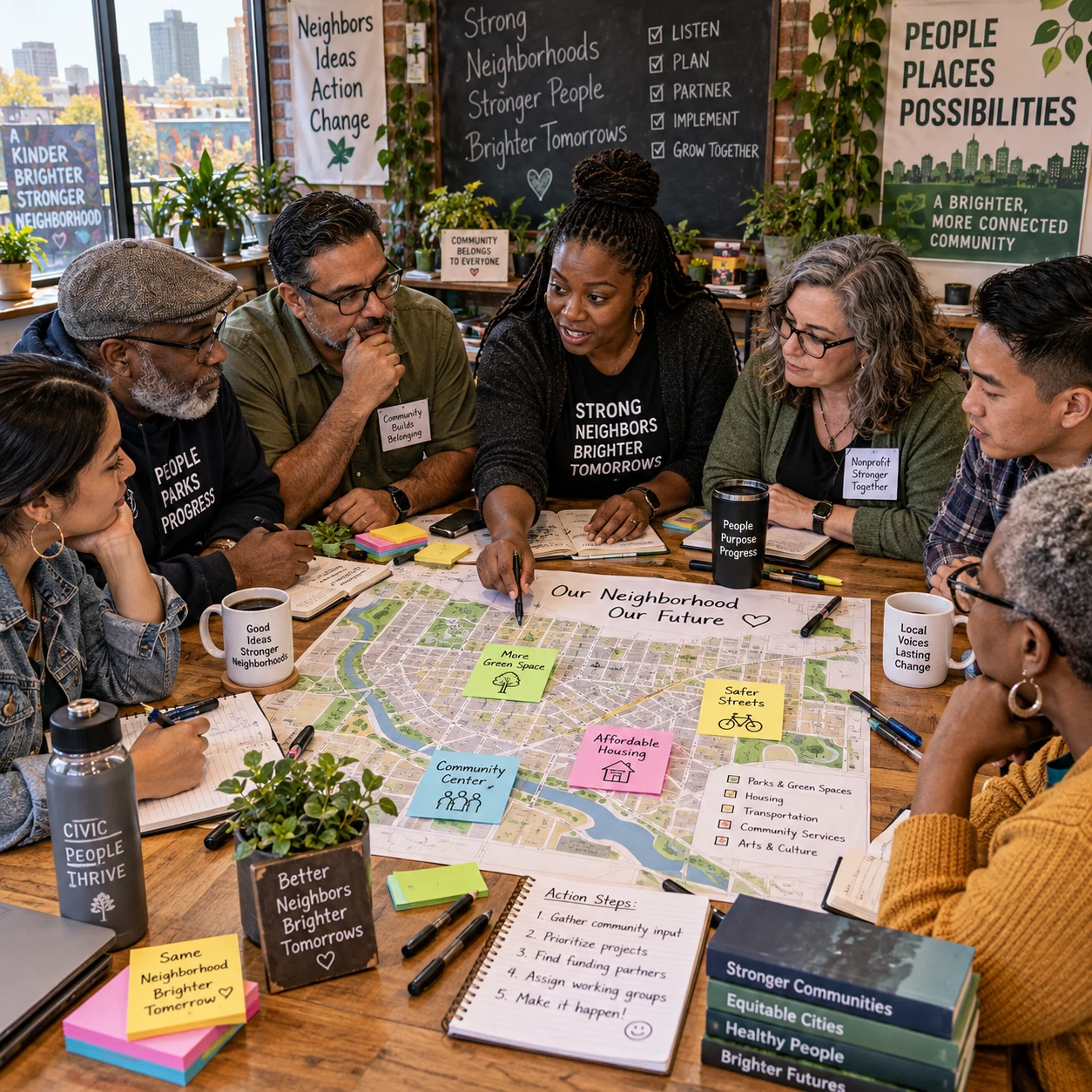
Neighborhood revitalization is often described through visible changes: a repaired park, a cleaner street, or a reopened community space. Those improvements matter, but lasting change depends on who sets the priorities and how the neighborhood maintains them. Community-led development puts residents in that decision-making role, with local organizations and civic partners contributing resources and expertise.
This case study follows a composite example of a neighborhood organizing around concerns such as neglected public spaces, limited gathering places, and weak connections among local groups. It does not claim specific measured results. Instead, it shows a realistic process communities can adapt: listen first, plan together, deliver manageable projects, and evaluate progress openly.
What Neighborhood Revitalization Means
Neighborhood revitalization is a coordinated effort to improve local conditions while strengthening residents’ ability to shape their community’s future. It is more durable when residents influence decisions, rather than being consulted after plans are already set.
Revitalization can involve public spaces, local services, housing conditions, safety, cultural life, or opportunities for neighbors to connect. No single project can address every need. A new garden, for example, may create a welcoming place to meet, but it cannot replace broader work on housing affordability or access to services.
In the composite case, residents begin with a shared concern: public areas feel underused, and neighbors have few dependable ways to meet. A community organization helps convene people, but residents decide which problems deserve attention and what success should look like. This distinction is central to community-led development: organizations can facilitate, fund, and advise, while local people retain meaningful influence over priorities and trade-offs.
Resident leadership also helps prevent a common weakness in revitalization: improvements that look impressive to outside partners but do not respond to daily life. The process takes time, and disagreement is normal. Its value lies in making decisions visible and creating a local base for follow-through.
Understanding the Neighborhood’s Needs
A sound needs assessment combines what residents experience with what the neighborhood already has. It helps a group choose priorities based on local knowledge, not assumptions made from a distance.
In the example, organizers use several low-cost ways to listen: short conversations at familiar gathering places, a simple survey, and a walking tour where residents mark barriers and assets. They ask what people want to change, what is already working, and who is missing from the conversation. A map can reveal that a neglected lot sits near a busy route, while a nearby school, faith group, or small business may already have useful space or relationships.
Good engagement makes participation possible for more than the people who can attend an evening meeting. Groups can offer child-friendly sessions, translated materials, phone or paper options, and stipends when funding allows. These choices require coordination, but they reduce the risk that a small, highly available group will speak for everyone.
Use both open questions and concrete prompts. “What would make this block more useful?” can surface needs a checklist misses. Asking people to rank a few realistic options helps clarify trade-offs. Record themes without treating any single conversation as a neighborhood-wide mandate.
Before moving on, summarize what was heard and invite corrections. That feedback loop builds trust and gives participants a chance to say, “That is not what we meant.”
Building a Shared Plan and Local Partnerships
Participatory planning turns community input into shared goals, clear roles, and an achievable sequence of work. Local partnerships are most effective when they support resident priorities and make responsibilities explicit.
In the composite case, residents and community organizations agree on a near-term goal: make one public space more welcoming and easier to use. They also identify a longer-term concern that needs separate advocacy, rather than implying a small improvement can solve it. A brief written plan records the chosen priority, who was consulted, what is outside the project’s scope, and how decisions can be revisited.
Partners may include a neighborhood association, nonprofit, school, local business, municipal department, or funder. Each can contribute something different: resident networks, facilitation, materials, technical advice, permits, or maintenance support. The plan should name a point person for each task and distinguish who recommends, who approves, and who carries out the work.
- Residents set priorities, identify local knowledge, and review whether plans fit community needs.
- Community organizations convene participants, support communication, and help manage logistics.
- Civic partners clarify regulations, provide technical guidance, and coordinate public resources.
- Funders and local businesses may contribute money, supplies, or services without taking over community decisions.
Partnerships work better when expectations are agreed before money or public attention arrives. A modest plan with clear ownership is often more useful than an ambitious proposal that has no maintenance arrangement.
Putting Community-Led Projects into Action
To move from a shared plan to project implementation, break the priority into manageable tasks, confirm permissions and resources, and keep residents informed as decisions change. Small phases make it easier to learn and adjust.
For a public-space project, early tasks might include checking land ownership, confirming permits, setting a budget, and choosing a design through resident review. The team can then schedule volunteer work, arrange materials, and agree on who handles safety and cleanup. If the project involves public property, consult the relevant municipal department before work begins; enthusiasm does not replace approval or technical requirements.
In the example, residents choose an initial improvement that can be maintained locally, rather than launching several projects at once. A community organization coordinates supplies and partner communication. A civic contact answers questions about site requirements. Residents review progress at regular check-ins and raise concerns before they become expensive problems.
Funding should cover more than installation. Budget for tools, insurance or permits where applicable, translation, accessibility, repairs, and ongoing care. Volunteer labor can build ownership, but relying on unpaid work alone may exclude people with limited time, mobility, or resources. Paid coordination or small participation stipends can make a project fairer when funding permits.

Keep a simple record of decisions, spending, and unresolved issues. That record helps partners stay accountable and makes it easier for new volunteers to join without having to reconstruct the project’s history.
Assessing Progress and Community Impact
Measuring outcomes means checking whether a project delivered what residents wanted and whether people can use and sustain the improvement. Combine practical indicators with direct community feedback.
Start by recording a baseline before work begins. Depending on the project, the team might note the space’s condition, how often it is used, whether residents feel welcome there, or how many local groups are involved. Choose measures that match the goal; counting volunteer hours alone does not show whether an improvement meets community needs.
A simple evaluation can track three levels:
- Delivery: Was the planned work completed, within the agreed scope and available resources?
- Use and experience: Are residents using the space or service? Do they feel it is accessible, safe, and relevant?
- Capacity and stewardship: Are local people and organizations able to maintain the improvement and make decisions about next steps?
Use more than one method. A short follow-up survey, an open meeting, informal conversations, and maintenance logs can show different aspects of progress. Share findings in plain language, including setbacks and unanswered questions. If participation remains concentrated among the same few people, that is useful information too: the next phase may need different outreach or meeting formats.
Evaluation should support decisions, not serve as a public-relations exercise. If a feature is rarely used, ask residents why before concluding that the project failed. Perhaps the timing, access, maintenance, or original design needs to change.
Lessons for Sustaining Change
Long-term stewardship depends on continued resident involvement, clear accountability, and resources for maintenance. A completed project is a milestone, not proof that neighborhood needs have been met.
The composite case offers several transferable lessons. First, involve residents before selecting a solution. Second, make roles and limitations visible so partners do not promise what they cannot deliver. Third, choose an initial project that fits local capacity, then use what the group learns to shape later work. Finally, plan for care from the beginning: identify who checks the site, reports damage, manages supplies, and decides when changes are needed.
Common pitfalls are avoidable. A project can lose trust if consultation happens after key decisions; correct this by sharing real choices early. A group can overreach by taking on too many projects; phase the work and review capacity. A partnership can become unclear when no one owns follow-up; assign named leads and dates. These corrections may slow the first steps, but they reduce confusion and help protect community time.
Revitalization also needs room for new voices. Rotate meeting times, keep participation options open, and report back on what changed because of community input. When residents can see how their contributions affect decisions, local partnerships are more likely to remain useful beyond a single grant or event.
Frequently Asked Questions
What makes a neighborhood revitalization project community-led?
A project is community-led when residents have meaningful influence over the priorities, decisions, and review of the work. Outside organizations can provide funding or expertise, but they should not substitute their own goals for resident priorities.
How can residents participate if they have limited time or resources?
Offer brief surveys, phone or text feedback, translated information, flexible meeting times, and opportunities to contribute in small tasks. When possible, provide childcare, transportation support, accessible locations, or stipends. Participation should not depend on having free evenings or the ability to volunteer for long hours.
How can a community measure whether a project is working?
Compare progress with the project’s original goals using practical measures such as completion, use, accessibility, resident feedback, and maintenance capacity. Record a baseline, share results openly, and adjust the plan when evidence or community experience points to a needed change.